
When Tatler last reported about Midterms during the Lakeside in Motion special issue, the nation was in the midst of a redistricting war as primaries were kicking off in multiple states.
Now, six months later, voters prepare to cast their ballots on Nov 3.
Every midterm gives voters the opportunity to decide the full makeup of the U.S. House of Representatives and a third of the Senate’s, while voters will also decide the outcomes of multiple state races. Some of these state races include spots in the Washington Legislature, which has 49 state Senate seats and 98 House seats; members for the state Supreme Court; and district or county specific roles including district judges and county assessors.
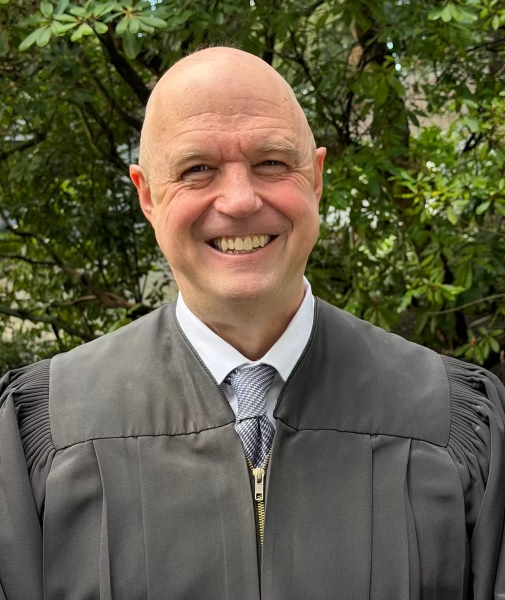
“[The] judiciary is the third branch of our government and the decisions it makes impact people’s lives in ways that aren’t super apparent because judges are behind the curtains,” said Sean O’Donnell, a Lakeside parent running for a position on the state Supreme Court. “The judiciary decides things like what’s a fair criminal sentence; it’s the final say on what the law is in Washington state.”
This year, all 435 seats in the House of Representatives are open along with 35 Senate seats. Both the House and the Senate are part of Congress, which votes to pass bills into laws.
Currently, in the House of Representatives, 218 seats are held by Republicans, 214 by Democrats, and three are held by independents. Meanwhile, out of the 100 Senate seats, Republicans hold 53 seats, Democrats hold 45, and two are held by independents. While the House’s seats are determined by district maps based on population, each state has two Senate seats.
While almost 60% of voters vote in presidential elections, only around 40% of people vote in the midterms, though many expect higher voter turnout in this election due to Donald Trump’s unpopularity energizing young voters.
At Lakeside, some of the issues people are worried about include climate change, racism, and the economy, according to the Tatler poll.
“If the price of food is increasing and if gas prices are increasing, that’s a topic of concern,” says Austen W. ’29, adding that “I think [DEI’s] something Lakesiders care a lot about. But nowadays it’s taken a backseat to all the other issues.”
Like in other elections, there is also skepticism about the impact of voting in a state already leaning strongly Democratic or Republican. This sentiment is also common at Lakeside. “I do think it’s true that if you don’t like something, you should probably vote for it or against it,” says Baran O. ’27. “But at the end of the day, I think where Lakeside is, all the congressional Democrats are going to get reelected. The general election will be decided by [the people in swing states], and not really anyone at Lakeside School, except for the caveat of local elections.”
Additionally, over the summer, other major decisions regarding the elections have been made, including The Supreme Court ruling that a majoriy-minority district in Louisiana was unconstitutional racial gerrymandering. This move weakened the Voting Rights Act, which protects minorities from being disadvantaged in districting; and multiple attempts to restrict voting by mail, a move that was struck down by the U.S. Supreme Court.
Washington Primaries:
On Aug. 4, 1.65 million people voted in the Washington primaries. In Washington, the top two candidates for every spot move from the primaries to the general election, even if they associate with the same political party. There were no primaries for the U.S. senators from Washington and the governor of Washington because their seats weren’t open for reelection this year, though many other positions were contested.
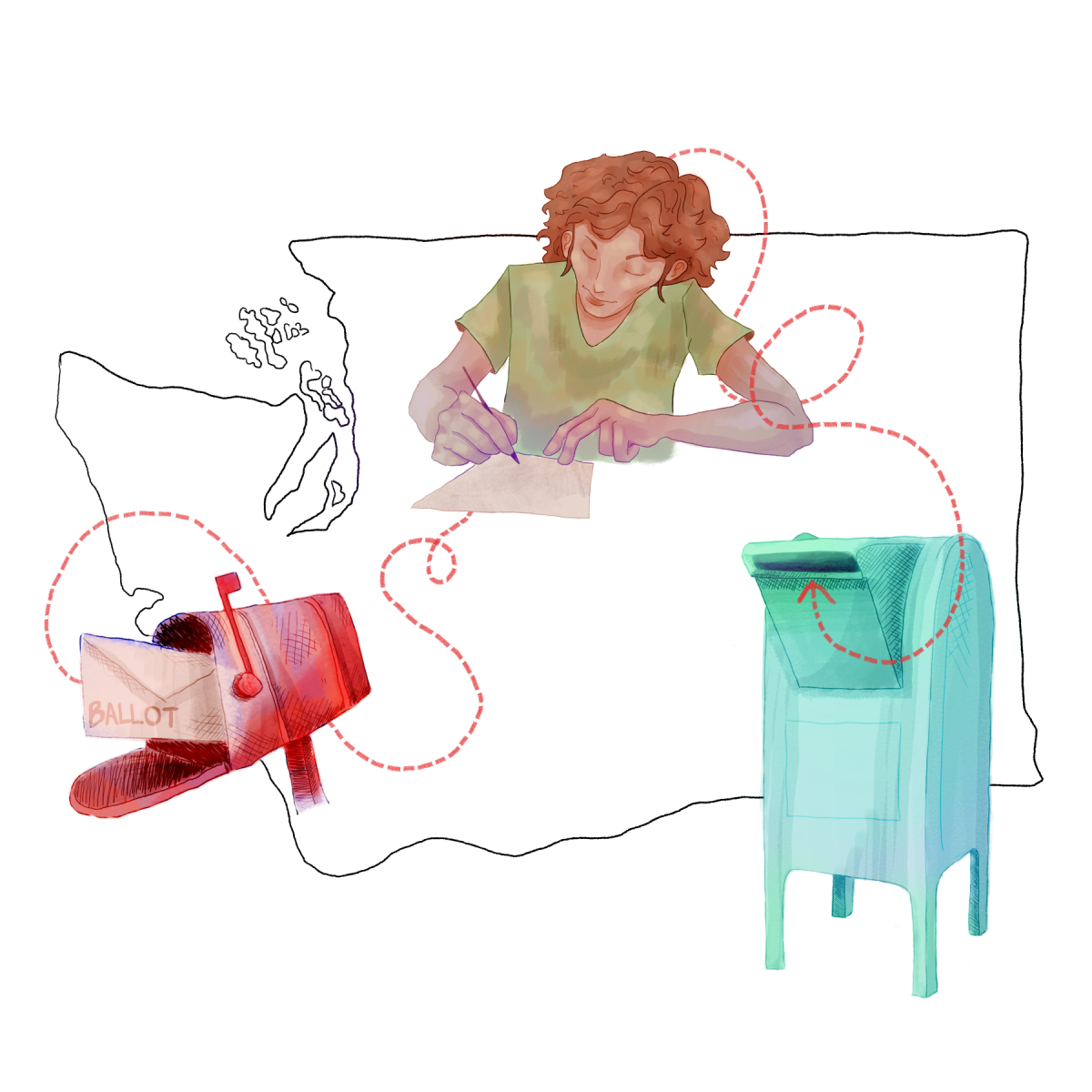
Washington relies primarily on the U.S. Postal Service to deliver ballots to voters, allowing voters to fill out their ballots at home and bring them to a nearby ballot drop-off location. However, this process is not the case for many other states. “People often wait in line for hours to vote. Almost no one has a day off from work,” says Ms. Piper, teacher of Lakeside’s Government, Politics, and Policymaking elective. She adds that the lengthy process could discourage people from voting.
Watching the Races
For those who aren’t eligible to vote in the upcoming election, there are plenty of states to pay attention to in the federal election. While Democrats are predicted to gain control of the House, many states have redistricted ahead of the election, giving maps that benefit Republicans more.
Meanwhile, according to The Cook Report, the Senate is widely considered a Republican-leaning tossup, with Democrats aiming to gain a seat in Alaska, Texas, and Maine and Republicans hoping to scoop up Democrat-held seats in New Hampshire and Michigan. As of late September, Donald Trump’s approval rating sat at a record low of -26, and Democrats are hoping the war in Iran, inflation, and the actions of ICE will influence independents into voting against the Republican Party.
Local Elections
While many have their eyes on national elections, many statewide or local elections go largely under the radar. Around one-third of registered voters vote in citywide elections, though the number varies by city.
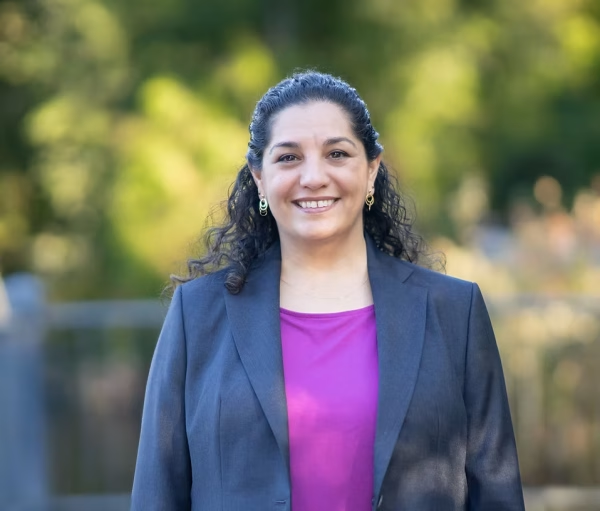
“What a tragedy that the place that enforces and implements all those laws at the federal level is where people don’t vote,” says Nilu Jenks, a Lakeside parent running for Seattle City Council. “For ICE, the president can say one thing but how we implement it on the local level matters. Whether we say ICE can’t show up on public schools or park grounds, that’s a local decision.”
Meanwhile, it’s not uncommon for voters to pay attention to specific local races and not vote in others. “Most people don’t pay attention to [judicial races]. The top of the ballot to when you get to judges has a change of 23% fewer voters. People just tune out, and they don’t vote judges because they don’t understand what they are,” says O’Donnell. “One of the major decisions the court made recently is the state of Washington’s paramount duty is funding public education. Public education, public safety, fairness in our justice system — that’s the State Supreme Court.”
According to the U.S. Census Bureau, 43.9% of youth from 18 to 24 voted in November 2024, compared to 59.3% of the total population. “I can’t tell you how much it matters to me to see young people vote,” says Jenks. “The difference in the mayoral election in Seattle was 2,000 people. That’s less than all high schoolers [able to vote]. A lot of people don’t realize how much local government matters in their lives until something goes wrong. We’ve lost track of how important those things are. That advocacy work and showing up matters.”
In Washington, there are also opportunities for people to contribute to the government other than voting for their preferred candidate. Due to worries that election funding was largely decided by those with financial means to donate to campaigns, in 2015, Seattle passed an initiative allowing Seattle residents to receive a democracy voucher, which has money that voters can give to their candidate of choice.
Meanwhile, the Washington ballot provides opportunities for voters to directly decide on laws, which are known as referendums or initiatives. One of Washington’s most significant referendums was Referendum 74, which voters passed in 2012. This referendum allowed same-sex marriage in Washington before it was legalized nationwide in 2015.
Anyone not registered to vote can also support candidates’ campaigns through canvassing. Both Jenks and O’Donnell have had teenagers support their campaigns. Meanwhile, Baran has helped politicians such as Adam Smith and Osman Salahuddin through a program called Democracy Summer. “Being on a campaign is probably the best way to indirectly get to know a candidate, and you maybe will meet them yourself,” says Baran.
When asked about what she wanted students to keep in mind about the upcoming election, Ms. Piper said, “I think caring about preserving our democracy is very hard to make top of mind for voters generally. We all really ought to care about those things. Finally these things that were supposed to be sort of abstract lessons in school feel a little more real and rare and precious. I would love for Lakesiders to be really looking around at the health of their democracy and thinking about what they can do about it.”