Sometimes, sweeping initiatives begin with something small: a handful of seeds, a conversation, or an ordinary summer day.
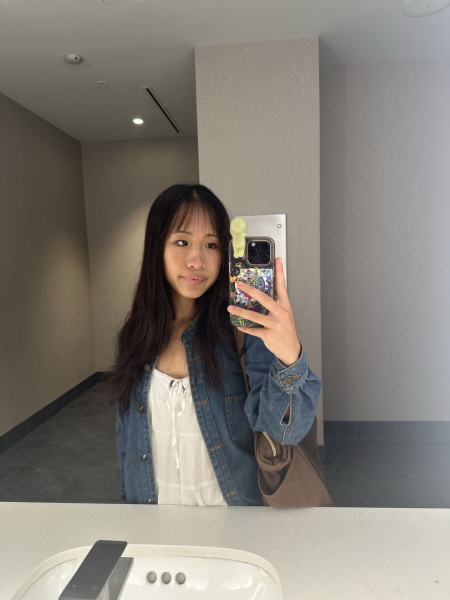
On one such summer day, Lakeside student Gabriella N. ’28 was busy reading up on famous English primatologist and anthropologist Jane Goodall. It was then that she first encountered the Jane Goodall Foundation-sponsored youth movement program Roots and Shoots.
“It was this worldwide program, essentially,” Gabriella recounted. “A bunch of kids in different regions decided to do stuff for their communities. I wanted to see if there were any in Washington, and I couldn’t find any. So I thought, ‘I kind of want to start my own kind of thing.’”
That September, Gabriella began asking around to find any other students who would be interested in joining an environmental restoration group. Three sophomore Lakeside students answered the call: Ava London A. ’28, Owen C. ’28, and Dilara Y. ’28. The other member, Harsh J. ’28, is also a sophomore and attends Sammamish High School. Together, they formed Washington Youth for Nature.
As the team began to take shape, each member found a different niche to hone in on. According to Owen, his specialty is ecology: he has “a lot of background knowledge on native Washington plants, life, the ecosystem.” Alongside his ecological knowledge, Gabriella said, he plays the role of the curator and marketing.
Gabriella, as the founder, leads and manages the team. “I usually organize and head the meetings, and make sure that people are doing their things that they’re supposed to do,” Gabriella said. She added that Ava London does the majority of the design around the visuals of the seed libraries and marketing, Dilara contributes a lot of proposals and aids in the ideation process, and Harsh does most of the outreach.
Harsh is also the creator of the team’s website, which is one of the ways the team is working to get their presence out into the digital world, Owen said. “We were wonderfully surprised when Harsh showed us the website for the first time,” Owen recalled. “It’s really polished and really smooth, and hopefully we’ll be able to add more to our website, especially our future locations and what we have in stock.”
After Gabriella assembled a willing group, things picked up speed. The team quickly landed on the idea of seed libraries as a starting project. “I think we were discussing something we could start small and then expand later,” Owen said. “The idea of a seed library was the most accessible,” he added, as seeds are relatively inexpensive. And a seed library was “something tangible that [they] could reach within the year.”
The team reached out to local nonprofits to see if they could form connections, and they met a willing partner in Maybin Chisebuka, founder of tBUG: The Bellevue Urban Garden. Lakesiders might recognize tBUG, as it is one of the available volunteer spots on Lakeside’s service learning list. “We initially were gonna put up a seed library at the YMCA too, but we needed a fiscal sponsor,” Gabriella said. “So we went to tBUG, we met with the owner there, and he said that we could put up one of our seed libraries [at tBUG].”
According to Owen, the main plant focus of the seed libraries is native flowers — “to intrigue people into planting them,” he said. Lupines, columbines, and yarrow count among the native flowers they hope to introduce into the libraries. “We plan to separate the seeds into little Mason jars [and] have a QR code that leads to a care guide or information sheet [on the outside of each jar],” Owen said.
In an urban environment such as Seattle, Owen explained, expanding greenery by sowing native plants is crucial. “We’re focused on repairing the ecosystem and helping local native pollinators — with seeds that are native to Washington.”
But why does the geographic range of a plant matter? Native plants are adapted to the Washington ecosystem, working in harmony with other local species. This is opposed to invasive plants, which might not have natural predators and outcompete the native plants, Owen said. “An invasive that I know that people don’t plant, but is also really prevalent is Himalayan blackberry,” Owen offered as an example. “It overtakes trees and smothers undergrowth, and it’s really harmful to the bottom layer of the forest ecosystem.”
A subgoal of the initiative, Owen said, is to inform people about these invasives through information packets situated in the seed libraries. Invasive plants include “noxious weeds that [people] may have in their yard,” Owen said, such as the Himalayan blackberry, or shrubs such as lavender, which are “decorative ornamental plants that [people] may have planted that could be really harmful to the ecosystem.”
Aside from the tangible aspects of their initiative, like the seed libraries, the team is striving for youth participation and representation in the greater environmental movement at large. “We feel like there’s a disconnect in the fight for climate change between younger people and adults,” Gabriella said. “And we feel like the biggest gap is people not knowing what to do with the seeds that they have. So that’s why we’re really focusing on information, but we also are focusing a lot on appeal; like, how do you make it so that people our age are actually interested and want to take these seeds?”
According to Owen, one way they hope to close that gap is by encouraging active participation with interactive components, like stickers and a place to tag a name after taking seeds. “We want to spark something in at least one or two people,” Gabriella said. “If we can get at least one or two people to start caring more about the environment, I would say that’s a win.”
But as the team worked toward making the seed libraries a reality and galvanizing the younger generations into joining the environmental movement, they encountered a hurdle that was discouraging — but not altogether unexpected. “We’ll apply [to an organization] for funding,” Gabriella said, “and the organization will always reject us.” The funding issues, she explained, are part of a larger pattern: a discrepancy in investment by adults, whether through funding or putting confidence in their efforts.
“When I gave my speech at the University of Washington botanical symposium, all of these adults told me, ‘oh, yeah, we’ll help you with this,’” she said. “But of course they never actually responded. Even when I reached out, they wouldn’t respond.” Gabriella added that the only person that actually followed up with the team was a UW college student. “I feel like that’s the core of the issue: that kids usually are not taken seriously by adults,” Gabriella said, “even though we’re the ones that are gonna inherit the planet.”
Indeed, though the majority of the members on the team hail from Lakeside, they have been unable to establish a seed library on campus. “I think we asked Dr. Bynum if we could put up a seed library over here, and he said no,” Gabriella said, but added that “maybe because it’s official land, [there’s] an issue there.”
Owen also reflected on the state of the campus from an ecological standpoint, explaining why a seed library would have been a useful addition. “In my opinion, on campus, I wish there were a ton more native plants and greenery,” he said. “We have so many massive just grass lawns that I hate — they’re like dead zones for the ecosystem. They don’t provide anything for pollinators or insects. Even with the greenery we do have, I don’t see any native plants that I recognize that would be beneficial.”
Despite the setbacks, Gabriella and Owen reported that working on the initiative brought the team closer together. “Collaborating and seeing people’s ideas—especially as we all have different roles—and seeing the progress people have made is really rewarding,” Owen said. “I also think that the process just makes [the project] seem so much more real.”
For students who are interested in climate change and ecological restoration, Gabriella advises them to focus on the small things, like “picking out an invasive plant that you spot, or planting a native one in your backyard.”
“Climate change seems like something that’s enormous to tackle,” Gabriella said. “But just starting from a small idea of, ‘oh I wanna meet up with my friends and do things,’ births something completely different. Then it becomes, ‘oh, now we’re gonna build a seed library.’ Doing something small, that’s how you build something big.”