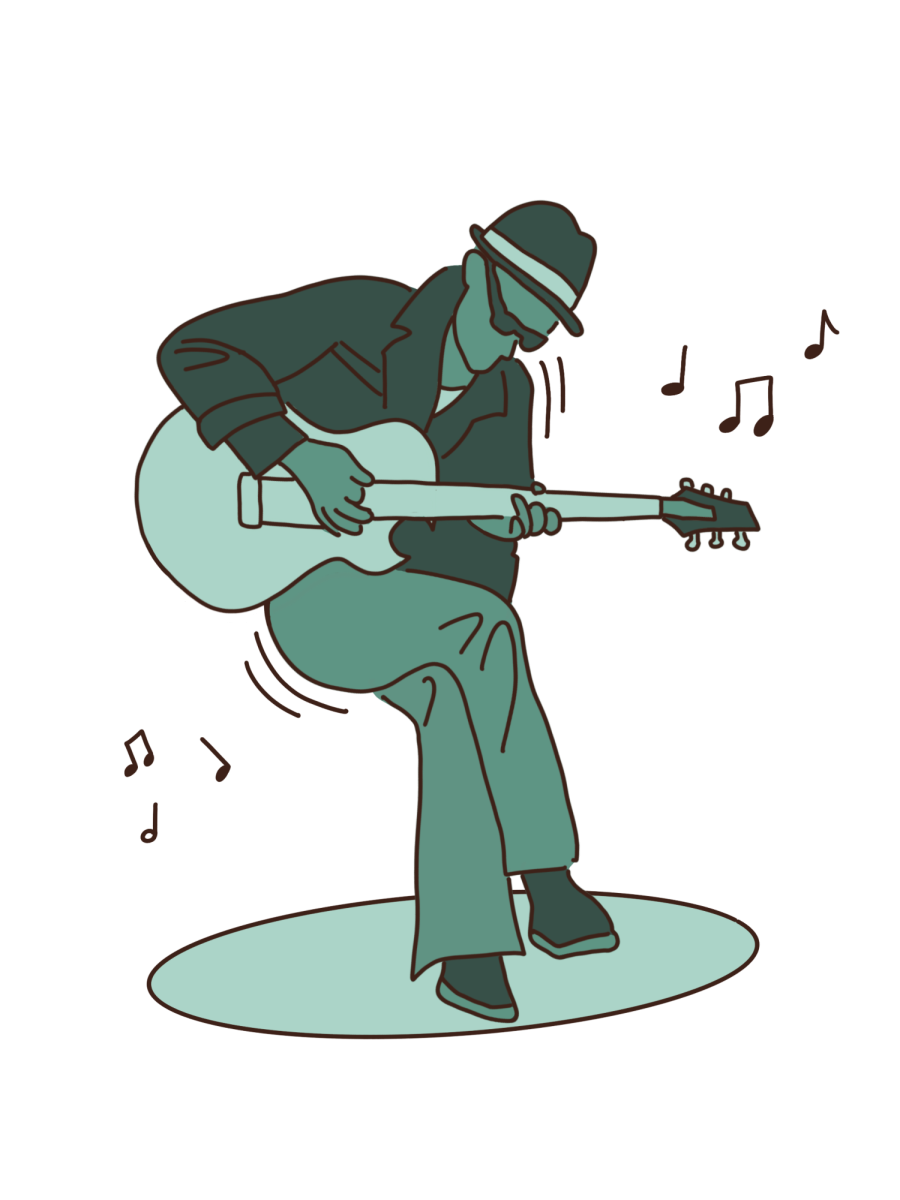
As the days grow longer, one might find themself strolling around the farmers market to the sound of sweet acoustics or hearing stunning vocals waft through the train station. These musicians, also known as buskers, perform around Seattle as the soundtrack to the city’s bustling symphony.
One such busker, Johnny Hahn, used to perform around the city but now plays almost exclusively at Pike Place Market because of the nearby storage lockers for his piano. “Some visitors at the market assume that the street performers get paid by the market, which is untrue,” Hahn reflects. Places like Pike Place are under the Preservation and Development Authority, a public organization that manages Seattle’s historical districts. To perform in those historical districts, musicians buy a permit fee that lasts for the next 12 months and adhere to the regulations in the historical districts.
Though street performers are seen and heard across the city, the details behind their profession — such as the permits and regulations Hahn describes — often go unnoticed. Lakesiders are no exception: when asked to rate their knowledge on a scale of 1-10, the average reply for the 87 respondents of the Tatler poll was a 3 or 4.
Part of that unfamiliarity comes from a long history of legal and cultural barriers. While music is now often at the heart of Seattle’s vibrance and culture, busking wasn’t legal for those not blind or disabled until 1974, when busker Jim Page testified for an ordinance defending all street musicians. Since then, buskers can perform in many of Seattle’s most treasured attractions, as long as they adhere to a noise ordinance. “He’s the bricklayer for most of the rest of us, for sure,” says Hahn. “I’m super super grateful for the people who laid the groundwork before me to allow me to make my living as a street performer.”
However, after the pandemic, there have been far fewer performers each day. “It’s a testament of how expensive Seattle’s become. You used to be able to live on a moderate level of income, and people who just loved [sharing] their art could perform,” Hahn reflects, noting how pre-pandemic, nearly every busking spot at Pike Place Market had a line of performers waiting to play; now, sometimes on weekends, the number is closer to three or four. “I write [and play] my political songs — at my heart I’m a political activist. The purpose of me being out there is my politics, and I happen to play the piano … it’s my vehicle to get my ideas out in the world.”
Meanwhile, another busker, Alexei Kendall-Bray, has spent four years busking as a full-time job, singing and playing acoustic guitar as well as electric and upright bass. Growing up, he was always into music, and did theater productions before joining a band and learning guitar when he was 17 years old. “I’ve been writing songs ever since I started playing,” Kendall-Bray says. He recently released a punk rock album with his band, Small Sports and released a solo album under the name Metermaid. “I worked really hard on [them]. I think a big thing to take away is that you don’t need a ton of money to make music. I’m proud of the two albums I’ve put out, and I’ve made them with almost nothing.”
Kendall-Bray mostly performs at places with heavy foot traffic such as farmers markets and train stations. He’s also performed at places such as winery gigs while the city also commissions him to play at parks around the city. He holds about 3 hours of music in his head, and mostly plays pop music. “I’ve had people give me flak for playing such basic songs, but that’s what people want to hear. It’s not necessarily up to the busker,” he explains.
For Kendall-Bray, performing outdoors doesn’t come without its challenges. Many performing areas don’t have shelters from the rain, and people (even in places like Seattle) will stay inside if it’s particularly rainy. “People aren’t inclined to give anything if it’s really, really wet,” Kendall-Bray explains. “During the atmospheric river, I busked only once or twice that whole week, it was tough. No one wants to hear buskers in the pouring rain.”
Overall, street performing is a creative outlet for many artists and a way people can share their talent to the world while also adding life to our favorite city attractions. “I’ve been doing this for so long, it’s really fun,” Kendall-Bray reflects.
So, if you ever find yourself meandering through the city and hear the sweet sound of music or spot a performer doing a show in front of a small crowd, be sure to stop to savor the moment and drop a tip for the people serving as the artistic backbone of Seattle’s culture.