When Lakesiders open next year’s course catalog, one of the most notable differences won’t be a new elective, but rather a change to English 11. Starting in the upcoming 2026-2027 school year, the junior English class is being rebuilt into five yearlong options, replacing the two-semester structure in place since the early 2000s. Alongside these major structural shifts, several electives are rotating back in, others are pausing, and two GSL courses are entering the mix.
A Revamped English 11
English 11 has always been a course focused on American literature, English Department Head Abby Cacho explains. But unlike many other yearlong classes, English 11 has been structured as a pair of semester courses since 2001. This means that, after the semester mark, juniors potentially take the course with a different teacher, different classmates, and during a different period. Academic Dean Hans de Grys explains that “English teachers originally believed that it would make their schedules easier to construct,” as many teachers would teach a fall 400-level senior elective and pair it with a spring English 11 section, or vice versa.
However, several common complaints arose from juniors in the class, said Mr. de Grys; many students expressed a desire to have a more cohesive experience, as well as have more choice in elective offering. Abby says that, in a yearlong class, given how grades build on themselves, students have more time to grow as writers and see the results they would like to see. Additionally, Abby said, it was difficult for teachers to craft a course that was representative of all of American literature, given its wide expanse.
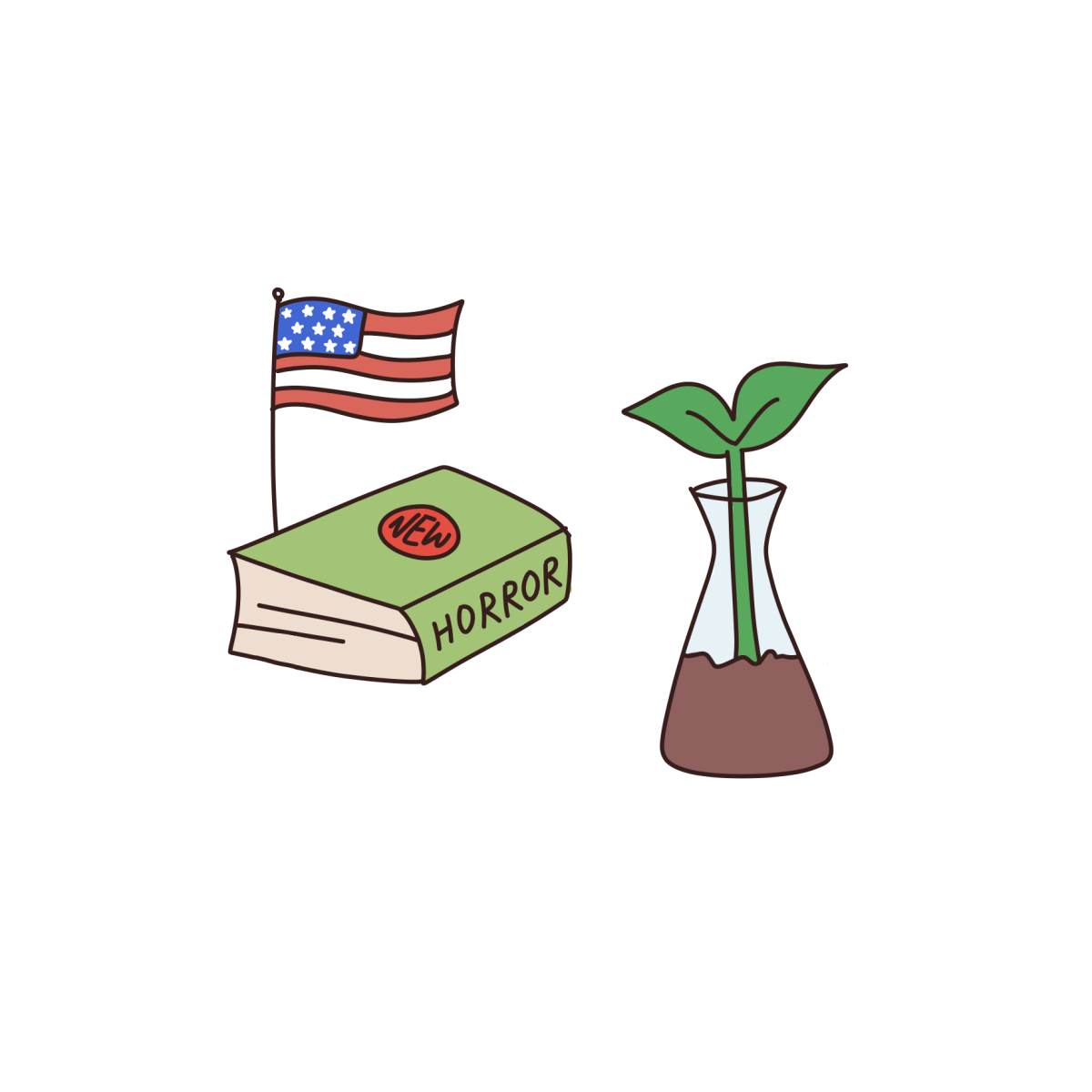
As a result, last spring, the English department went on a weekend retreat to revamp the English 11 curriculum. Two years prior, the department held a similar retreat to discuss the English 9 and English 10 curriculums, and then subsequently developed the respective yearlong themes of coming of age and home. Drawing on past retreats as inspiration, Abby described the goal for the retreat this spring as to “think about how to introduce more student choice,” as well as to shift back to a more cohesive yearlong format. Eventually, the department settled on turning English 11 into Literature of the United States, and splitting it into five separate courses focused on American literature: the existing American Studies course, as well as four themed English 11 offerings, which are Journeys, Generations, Hauntings, and Resistance.
Journeys will be the course most similar to the current English 11 offering, with a focus on the question “How does literature reflect and create a complex intersection of social, historical, economic, and cultural forces that shape the United States?”
Generations will focus on the United States as a place of migration, said Abby, answering the story of what it means to be an American through people, family, and migration.
Hauntings will “grapple with what [the United States] fears and its responses,” Abby describes, with examples such as enslavement, racism, and the Red Scare. The key question driving the course will be “Why do certain stories refuse to rest, what haunts the United States and what does that mean in our contemporary lives?”
Resistance will answer the questions “What happens when a writer refuses to follow the rules?” and “How does breaking literary and cultural boundaries reshape our understanding of America?” through analysis of banned books as well as how writers use “voice, form, and subject matter to question authority, disrupt norms, and reimagine national identity,” according to Abby.
Mr. de Grys describes the courses as a “sampler” of all of American literature; although still spanning different eras and forms, each course will be filtered through the lens of a specific theme. Each section is expected to be taught by only one teacher, giving teachers more room to shape the course around their expertise, according to Abby. She’s excited to “give teachers more opportunities to teach what they love,” arguing that students benefit when teachers and students alike are passionate about the material.
The department’s final list wasn’t the only set of possibilities. Abby said that themes like Americans at Home and Abroad, Contemporary Topics, and Sensing Literature were discussed, but didn’t make the cut. However, over time, the themes are expected to rotate: future catalogs may swap in new offerings or bring back themes that didn’t run this year, depending on student and teacher interest.
Travelling the Globe
Next year, two GSL courses will be offered: a GSL Morocco version of World History II: Modern World rotating in for Advanced Ecological Studies, as well as a GSL French Polynesia version of French IV, V, and VI, rotating in for Spanish’s GSL Costa Rica. Similar to many past GSL courses, the standard versions of these courses will still be offered.
Since Advanced Ecological Studies will not be running next year, a new yearlong course, Conservation Science and Endangered Species, will take its place. “It won’t be the same class, but it will have some similar elements,” says Mr. de Grys, “and students looking forward to taking that ecology class might be interested in this one.” Although the course won’t have a GSL component, Mr. de Grys says that experiential learning will still be incorporated through local field trips and potential service hours.
As Dr. Brooks returns from maternity leave, her fall elective Bioethics and her spring elective Psychology will be returning. Additionally, the spring electives International Politics and Economic Development and History of Capitalism will be returning. Dr. Pingree says that she was “excited to bring [the History of Capitalism elective] back because [her] own research is in the history of labor and capitalism,” and electives like these often pause because there are no teachers that specialize in that subject.
On the English end, the fall elective Studies in Literature: Shakespeare, which last ran in 2009, will also be returning. Its companion, an immersive three-week summer course, Literary Explorations: Oregon Shakespeare Festival Experience, will also be offered in the upcoming summer. Along with a three-night field trip to the Oregon Shakespeare Festival, the summer course will count as credit towards the graduation requirement of taking two 400-level English courses.
Other new summer school courses include studio intensive courses in both Ceramics and Sculpture as well as Drawing and Painting, as well as a new offering in planetary science for Lakeside Summer Institute.
Looking Forwards
Trends in course change requests have reflected an evolution at Lakeside, explains registrar Kristen Lesoing. When she began at Lakeside in 2015, she saw it as an arts-heavy school focused on theater and music; since then, Lakeside has trended towards becoming a STEM-focused school, with the number of advanced science courses growing from two to eight in her time here.
With the construction of the new building expected to finish this semester, advanced science courses like Molecular and Cellular Biology, Organic Chemistry, and the advanced physics classes will be able to do more experiments. In the long term, Lakesiders can look forward to an engineering and design lab being added to Allen-Gates, and consequentially, brand new courses in engineering, said Mr. de Grys. He expects these renovations to be completed in the next three years, in time for current freshmen to experience.
Mr. de Grys describes these shifts as a part of keeping the Lakeside curriculum dynamic and responsive to the needs of students in 2026, which means sometimes “putting some other things on pause so that we can bust out some new things.”