
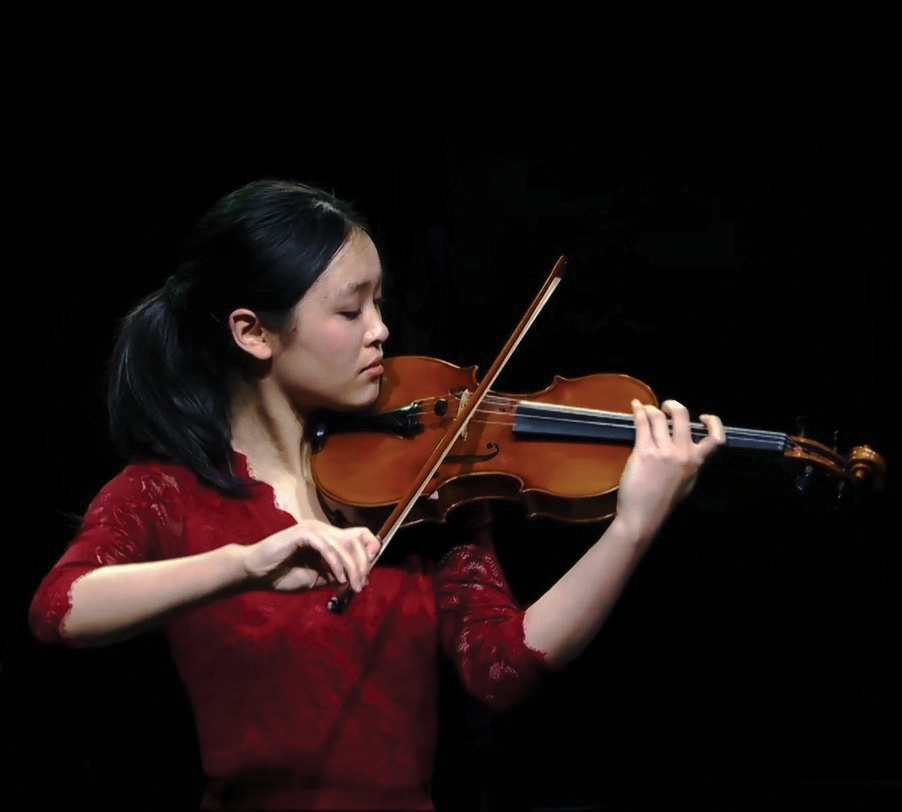
As a longtime member of the Seattle Chamber Music Society (SCMS), a former member of the Seattle Youth Symphony Orchestra, and a winner of several competitions, including the WMEA State Solo and Ensemble Music Festival, Caileen is without a doubt a talented and passionate musician. In addition to performing with her SCMS chamber group on KING-FM’s Northwest Focus Live, she has participated in several prestigious music summer programs, including the Meadowmount School of Music and Center Stage Strings. Tatler asked Caileen about her experiences with music, what it’s taught her, and advice she can pass on to musicians in the Lakeside community.
This interview has been lightly edited for clarity.
Who or what inspired you to begin playing music?
My siblings! My older sister started piano and singing lessons at five years old, and my older brother began violin and piano lessons at three years old. After years of listening to them practice at home and tagging along at their music lessons, I naturally began taking violin and piano lessons once my parents thought I was old enough.
What instruments do you play, and why did you choose them?
I play the violin and piano. I wouldn’t say I specifically liked them more than other instruments; rather, I was drawn to the familiarity of hearing my siblings practice them every day, and I wanted to follow in their footsteps!
What are some of your favorite pieces you either have played or are looking forward to playing, and why?
The first complete concerto I learned was the Sibelius Violin Concerto, and I’m really grateful for that piece for multiple reasons. When I first attempted the first movement over a year ago, I felt neither technically nor emotionally prepared. I hadn’t learned any other major concertos prior to this piece, and the Sibelius was a terrifying combination of demanding technique and the composer’s intense emotions.
Nearly a year and a half later, I’m so glad I decided to keep learning this piece. Not only has my technique improved significantly, but I’ve also learned so much about how to express both the composer’s and my own emotions through my playing, the value of researching music history, and the joy of achieving a satisfactory performance after a year of hard work. I still have much to work on with this piece (especially the third movement), but I’m incredibly grateful for the challenge and growth it’s given me.
I also have so many dream pieces that I’d love to learn! Brahms Violin Concerto, Franck Violin Sonata, Chopin Piano Concerto No. 1, and Ravel Jeux d’eau are just a few, and some of my dream chamber pieces are Brahms Piano Quartet No. 1, Smetana Piano Trio, and Dvořák String Quartet No. 13.
What are some of the most valuable lessons or pieces of advice that you’ve received regarding music?
While watching an episode of TwoSet Talks on YouTube, I came across a piece of advice from violinist James Ehnes: if you make a mistake once, it’s forgivable, but if you make a mistake twice, that’s on you! Since then, I’ve started holding myself to a much higher standard during my practice. Onstage, there are many uncontrollable factors that can lead to accidents, but offstage, I try to be completely in control of my own playing. During my practice, I don’t allow myself to “accidentally” repeat any mistakes. If I repeat a previous mistake, it shows that I’m either playing too fast, not fully addressing the issue, or not being consistent with what I’ve practiced. It takes a lot of slow practice, discipline, and constant reflection to be intentional about not repeating any mistakes, but this kind of diligence has been immensely helpful for the consistency of my performances.
What does practicing look like for you, and how do you balance music with your other commitments?
To be honest, practicing has always been a struggle. I’m not great at focusing for long periods of time, so I’ve had to come up with lots of ways over the years — splitting up practice time into smaller chunks, using website blockers, and practicing in another room from my electronics — to keep myself focused on my practice. Nowadays, I write notes after all my lessons and rehearsals, and I also write practice plans to track what spots I need to work on in all of my repertoire!
Unfortunately, music practice isn’t very flexible. I can’t bring a piano along with me and practice my scales during passing periods or practice violin on the commute to school. Instead, I try to take advantage of those little pockets of time to finish smaller tasks (getting homework done, responding to emails, catching up with friends online) and then practice my instruments as soon as I get home. Also, I’m a huge fan of spaced repetition! Not only do I prefer having multiple practice sections spread out throughout the day (in the morning, right after school, after dinner), I find it super helpful to revisit especially tricky spots multiple times throughout each practice session.
What advice do you have for Lakeside musicians (can be directed at all/beginner/advanced/etc)?
Find a community! Having people who will root for you from the audience, support you for your successes, and cheer you up when you’re struggling is hugely beneficial for multiple reasons. First, being surrounded by incredible peers is the best motivation to pick up your instrument and practice! And more importantly, due to the majority of time spent practicing an instrument being alone, it’s very easy to get overwhelmed in your self-criticisms and eventually burn out. That’s why it’s so important to get out of your head and have fun with the people around you — bond over your favorite pieces together, sight-read chamber music, and show support for your amazing peers. The more joy and appreciation you give to others, the more you’ll get in return, which will make the entire process of learning an instrument so much more fun!
In addition, meeting new people is one of the best ways to gain inspiration and improve your musicianship. Every musician is different, and each person has their own technical strengths and unique interpretations that can change the way you learn and appreciate music. Ask others about how they manage their practice time, how they combat stage fright, or how they choose competitions. Ask them for feedback on your performances! Don’t be intimidated by others — the temporary embarrassment of asking someone to analyze your playing is far outweighed by the value of their knowledge and advice, and I promise, nobody will ever judge you for asking a question!On the flip side, constantly seeing others’ successes and wins can be somewhat discouraging, so I recommend for Lakesiders to redirect their focus from achievements to progress. It’s unfortunately impossible to control how a judge perceives your performance in a competition; music is inherently subjective, and there are many criteria that go into a competition that aren’t even related to your playing (ex. repertoire choice or past experience in the competition). However, you can control your own efforts. Practicing with focus and organization, listening to recordings online, seeking feedback from mentors and peers, and watching educational content (like TwoSet Talks, Nathan Cole, and Tonebase) are all great ways to improve more quickly and grow as a musician!