
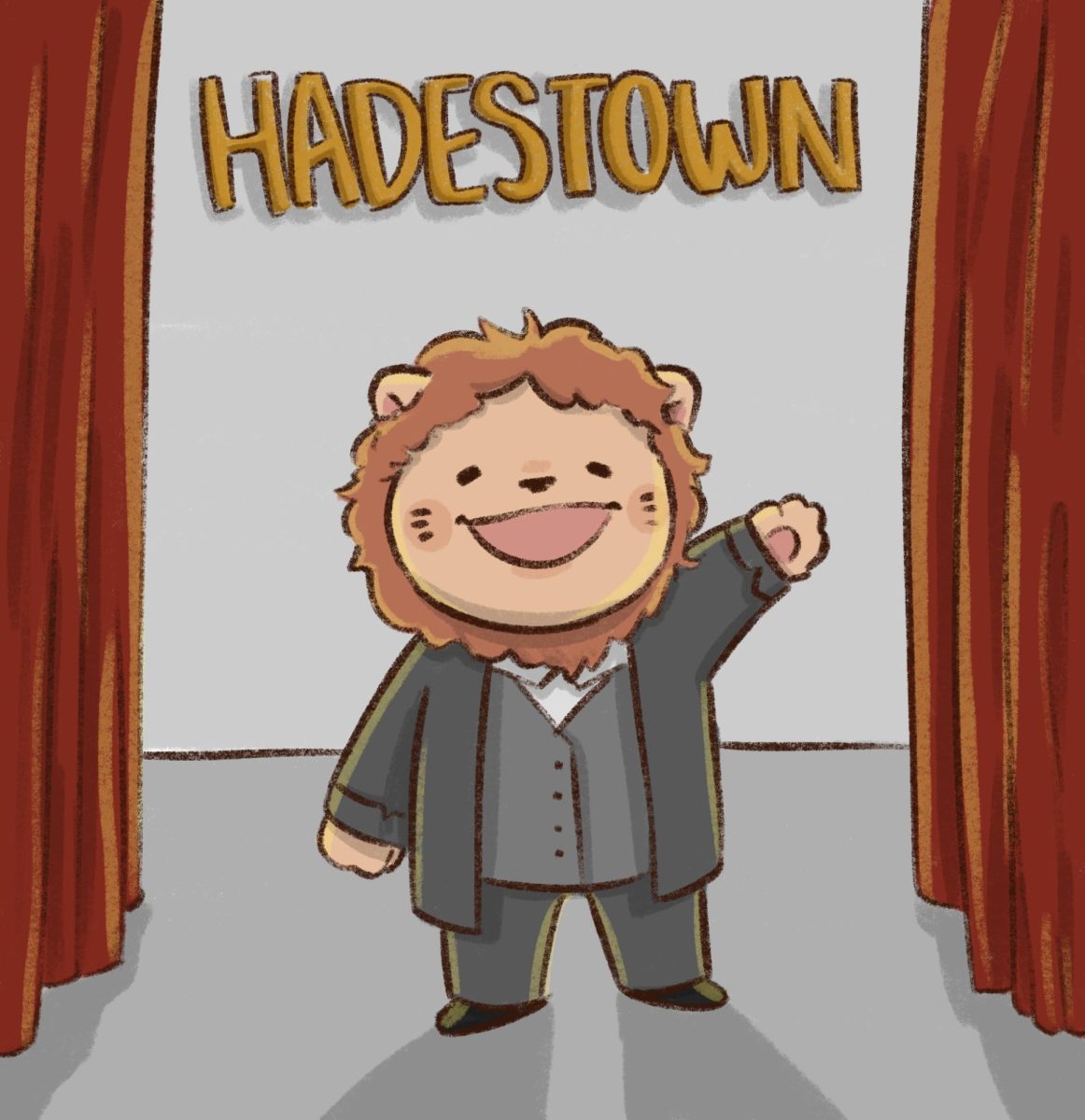
As the leaves change color and the days get shorter, the Upper School arts department is turning its attention to love, loss, and the passage of time. It’s time to get hyped for a classic and a cult-classic to reach the Lakeside stage: Much Ado About Nothing and Hadestown.
But these shows weren’t just decided by a lucky draw or a shot in the dark; the production logistics, copyright issues, and so much more that went into these shows’ selections are invisible to the viewer’s naked eye. So, we got in touch with US drama teachers Alban and Micky to get the scoop on how we ended up here.
Starting off, to say that the choices for the play and musical were decided in one fell swoop couldn’t be further from the truth. “I changed the play about a week before, and [Micky] changed the musical an hour before we were going to send out the notice,” says Alban. Micky adds, “We made the decision, and I was making a season announcement when I heard we got the rights for Hadestown the day we were going to announce.” And that was that. With a comedy on one side and a tragedy on the other, it would seem as if they would clash. However, for a musical and a play that were effectively last minute decisions, it’s pretty remarkable how well they ended up working together. But if you are one of those unlucky souls who aren’t familiar with these selections, here is a quick taste of what’s to come.
Much Ado About Nothing and Hadestown are both stories about love: one ending with joy, the other… not so much. Shakespeare’s play centers on two enemies, Beatrice and Benedick, who decide to play matchmaker for their friends Hero and Claudio. However, Don John, the jealous, illegitimate brother of Claudio, seeks to sabotage their relationship. While trying to wade through the misunderstandings that ensue, through humor and strife, Benedick and Beatrice end up forming a bond akin to love.
Having existed since 1598, the play has gone through lots of adaptations, some famous examples including Kenneth Branagh’s version and the 2023 film Anyone But You. For Lakeside’s take, Alban says we’re going to be adopting a more modern approach: “We’re going to contemporize the setting, but not the language” – although lines of dialogue may be cut for conciseness. So, if you enter St. Nicks on opening night to find characters in jeans and hoodies talking in Elizabethan English, don’t worry; you’re not having a stroke. “I think what’s fun is for us as a cast and as a crew to think about how we can change it to make it our own,” Alban elaborates, mentioning how Shakespeare himself took stories from the past and wove them into new scenarios to make them his own, such as Pyramus and Thisbe and Romeo and Juliet. “[Shakespeare] was a great thief, for sure.” With its large cast of enigmatic characters and timeless storyline, it’s no wonder the play made the final cut. He ends with this statement: “The language is beautiful, it’s funny, it’s touching, and it’s tragic; there are all sorts of things that happen in the play, and I think our community will love it and I think that our students will love to get into it.”
Turning to the spring season, Hadestown, a musical written, produced, and orchestrated by Anaïs Mitchell, will be the companion to the fall play. A modern-era “hypercontemperary” retelling of the myth of Orpheus and Eurydice, the musical is heavily influenced and inspired by the jazz and blues of New Orleans, one of Mitchell’s favorite music scenes; the musical utilizes the scene’s signature brass and percussive elements like trombones and slap bass. It even influenced the design of the original production, showcasing a southeastern-style, Bourbon Street-esque club as its set. In it, we follow a heartbroken Orpheus into the underworld to retrieve his lover after her untimely death. However, the task proves to be harder than it originally seemed, both physically and mentally. Since one of the main themes for the selection this year was the blending of old and new storylines, it makes sense why Hadestown was a perfect fit. “You have the deep tragedy of the Greeks mixed with the splendor of post-Hamilton era musical theater,” explains Micky. “It’s just going to be this gorgeous depiction of a classic story.” Of course there are some difficulties to navigate, especially regarding the visual elements of the production. This is because, in the production rights that Lakeside has accepted, certain stage props, choreographies, and set designs are not permitted for us to use, says Micky: “We’re gonna have to really educate ourselves on what already exists with Hadestown, and then do something completely different.” That being said, this may be a blessing in disguise. Just like how Alban is doing his own take on the play, these restrictions “force” Lakesiders to create something unique to our own stage. “I haven’t seen this production before, because I don’t want to be influenced by someone else’s creative choices,” Micky decides. “I want this production to be ours.”
Speaking of productions that are ours, this is your reminder that, nearing the end of the school year, Circus will be returning. For those who are new, Circus is a yearly production of plays written, directed, and performed by Lakeside students. Although historically Circus has been a drama-only production, opportunities for acting in the production are open to all students. Yes, all students. So, if you are interested in participating, don’t be afraid to reach out. Even if you aren’t, please drop by to see some awesome stories and performances!
Whether you’re in the mood for a comedical family affair, a jazzy, fresh take on classical myth, or everything Circus has to offer, performances will be here on November 14th-16th, March 6th-8th, and May 13th-15th, respectively.