
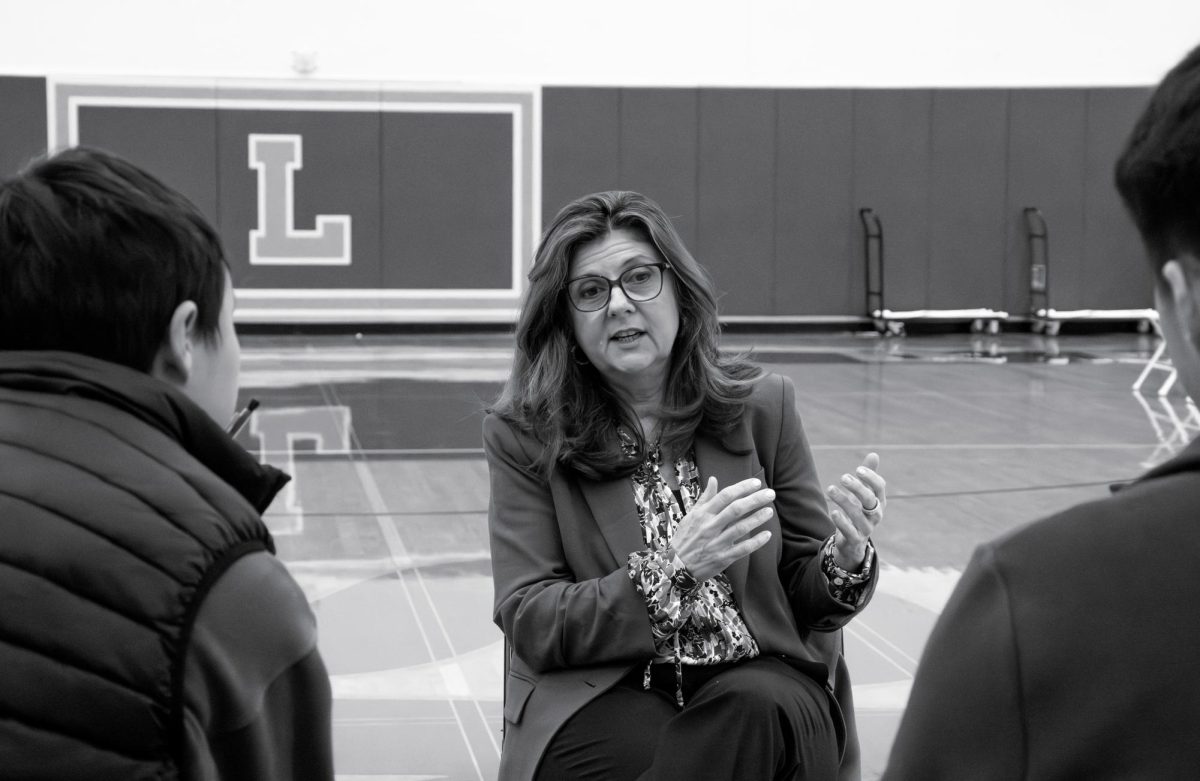
Dr. Betsey Stevenson is a professor at the University of Michigan teaching economics and public policy. From 2013-2015, she was appointed the U.S. Department of Labor Chief Economist under President Barack Obama, and advised policy regarding labor economics and American families. Tatler spoke to Dr. Betsey Stevenson before her lecture on marriage trends as results of economic factors, and decided to focus the interview on some of her prior work with the government.
Matthew K. (MK): You talked a little bit about how we can use the tools that economics gives us to analyze a lot of aspects of the world, and I was curious: in your journey, throughout government, through academia, and through being a public personality as well, how has that approach changed? How has your approach on viewing money changed?
One of the things I noticed, even as an undergrad, so many years ago, was that economics does not actually have values or ethics in it. It’s a framework for analyzing problems and you bring your values. We need to make sure that lots of people learn the tools of economics, so that we have lots of different ethical and value frameworks that are using the tools of economics.
I always hear from people, like, economics is about business. Economics isn’t about business; it’s about people. It’s about how people make decisions, how people succeed, and how people deal with trade-offs in life.
When you say, “how has it changed?” I think I’m applying that very idea to the much broader idea of what will happen if we have transformative AI, and people’s work is not that necessary anymore. That is both a scary concept, but it’s also an amazingly liberating one. But, at the same time, I spend a lot of time with these tech people who tell me we’re gonna eliminate scarcity. Elon Musk says this. I don’t think you can eliminate trade-offs, because even if we got rid of scarcity, we’re not becoming Tuck Everlasting. The most important scarcity is the scarcity of time. So there will always be trade-offs. … Most of our ancestors have dealt with very stark trade-offs around life and death. We may not be facing those kinds of trade-offs, but we’re still gonna have our own trade-offs.
Your generation, more than any other generation, is dealing with facing trade-offs, where how you choose to spend your time might feel good in the moment — scrolling Instagram or TikTok, you know that it’s not good for you in the long run. … And so that’s a very important trade-off. Like, “I am overwhelmed with the world, and all I want to do is scroll right now.” Well, if I scroll right now, I’m gonna feel worse. How do I balance this? How do I make these decisions?
I don’t think these things are going away. So I think the economic toolkit is getting even more important for people to learn, because it gives you an analytic approach to thinking about how do you make trade-offs that might involve, you know, costs right now, but benefits in the future, or benefits right now versus costs in the future.
Timothy D. (TD): Touching on your past research; for example, one [paper] you did with Justin Wolfers touched on the redistribution of wealth which you argue could increase total happiness in the economy by transferring wealth from wealthy people to less wealthy people. But this is a politically unfavorable move. So how do you suggest governments navigate this action if at all?
I love that question. I also love that you read that research correctly, because it really does find that if I’m a social planner, and all I’m trying to do is maximize happiness, if it had no impact on the total amount of output we produced … then I would make everybody have an equal amount.
This gets to the heart of what economists call the equity-efficiency trade-off. What we have always been dealing with is that if you redistribute, then you blunt incentives, which reduces output. Now, don’t take those incentives to the extreme, but they are still there, and that’s what the trade-off is all about. It’s that we all work a little bit harder ’cause we think we’re gonna get more. And it’s really hard to motivate people to work harder just to contribute to the common pool. You have to have a very, very, very strong societal framework, where people get out of bed every day and work as hard as they can, when everything they’re producing is just going into a common pool.
That’s why I think it’s so hard to get redistribution. But a trade-off means that you’re still trying to balance those things. So that doesn’t mean no redistribution, but it also means complete redistribution would be kind of crazy. Like, if you just woke up every day and everybody’s gonna have the same income, no matter what you did, you might play video games all day. But the research does show that the very bottom of the income distribution is already kind of scrambling, and when you give money to the bottom, you don’t actually end up seeing them work a lot less. And people at the top, the billionaires out there in particular, they’re driven by things way beyond money, like ego, which means you can take some of their money and they’ll actually still keep working.
I think you just have to think about how you make that trade-off. This is why I’m an AI optimist. If it’s capital … that is generating most of the output, the equity-efficiency trade-off starts to go away, because we’re not actually relying on people’s work. I don’t think it fully goes away, but let’s imagine that it just becomes half of what it is today. Well, that says do twice as much redistribution, or even more. So I think we’re coming to a world where we’re gonna need to do a lot more redistribution, and one of the things we need to do is try to figure out how to talk to the public about that in a way that feels fair to them.
I’ve been talking a lot about what I call a digital dividend, which is you should have a share of TKTK If it’s based on, the book your great-grandfather wrote, and it’s based on a speech your mom gave, and it’s based on your clicks, as you search through things, shouldn’t you get a share of the returns because you contributed? That’s a different framing instead of it being “oh, let’s redistribute from the succeeders to the failers,” which is how I think, unfortunately, a lot of people frame it. Instead, we say, “Well, everybody actually has a right to the benefits of AI, ’cause AI wouldn’t occur without all of us having made all these contributions.” Maybe that gives us a different and more hopeful way to talk about redistribution.
TD: This is a quick question, but do you feel like the [equity-] efficiency trade-off varies a lot between cultures, or is it kind of universal?
Culturally, the United States has a very independent culture. It’s like, “I can work hard and improve things for me.” Other countries, other cultures, have a little bit more of “you’re supposed to contribute to the common good.” My partner is Australian, … and Australia definitely has a bit more of a “you’re supposed to contribute to the common good.” And so, I think it’s been easier for them. They do have higher tax rates and more redistribution.
One of the reasons I have wanted to be not just an economist in academia, but also in government, is the details of government policy programs matter. How they’re carried out, and what kind of impact they have on society, can really come down to some pretty nitty gritty details. President Obama, during the 2008 financial crises, decided one way to help people out was to give a tax cut that went straight into people’s paychecks. So people didn’t get handed a big check. Their paychecks just got a little bit bigger because the IRS stopped withholding as much money. Nobody knew that the president had given them a tax cut. So, not surprisingly, when Donald Trump became president in 2016, he sent people checks and signed them “Donald Trump” so everybody would know Donald Trump gave you this money. That’s what I mean when I say detail, though. It’s a really important detail in terms of people’s awareness, and awareness shapes people’s behavior.
TD: Then, in order to have more redistribution, especially with AI becoming bigger, do you feel like the change should come from a social stance, or should it come from the government?
Right now, trust, it is really an all time low, and I mean trust in the government, but also interpersonal trust. And when interpersonal trust gets broken, then you don’t want to contribute to me because you’re like, “I don’t even know you. And I don’t trust you.” So if you think nobody else is jumping over the turnstile in the subway station, you’re not gonna jump over the turnstile. But if you think nobody’s paying, then you feel like, “I’m the sucker who’s paying, I’m not gonna pay.” So, it’s not about people being good or bad. It’s about whether they feel the social contract is being upheld by other people. You gotta believe I’m gonna uphold it, and now we’re in a good equilibrium.
And, how do we get in the good one? Well, part of it is we all just — every day — have to go out and be, you know, “I am patriotic, and I want to believe in my country, and I’m gonna believe in my fellow countryperson, and I’m gonna give people a chance who are different from me in all sorts of ways, in the political ways, and the way that they carry themselves and the way they present to the world. But I’m going to embrace our common humanity and our common nationality.”
It’s a very hard problem to fix, but I think we can do it through building civic organizations, by building relationships, through volunteer organizations, through clubs. Go home and encourage your parents if they’re not already playing in a pickleball league or singing in a choir that they need to build their social connections. And the more we encourage each other to hang out with people who are different from us, the better our TKTK will be.
MK: On X in 2022, I read that you posted, “We are failing all of our children. Selfishness in American adults is stupefying.” I was wondering if you could expand on this. How should American adults be ensuring a future for us? And what should our future look like?
I think that young people, we should be investing in them. We’re protecting a world that older people think is right without actually listening to what young people want. And so you look at young people keep telling us they want paid parental leave. And we fail to deliver that because they’re like, “No, we’re spending too much money on Social Security.”
And then, of course, the gun violence thing is just out of control. And that, we are failing. I mean, it’s not just the actual homicides that happen in school, but you guys having grown up having to do drills. This is a horrible way for children to be raised. That very much frustrates me, because it is a selfishness.
And this is kind of what I mean about the “how much you’re going to care about the community,” which is you might not even have kids. You’re not in school. But you should really care that there are kids doing — and we don’t even hear about them in the news — lockdowns and drills all the time for false alarms, and for practice.
TD: And do you feel like this is different this generation, or [has] it always been a trend throughout history?
I think it’s new in the sense that the baby boomers, when they came of age, they had a lot more power — their ability to influence, like, Vietnam through protests. Also, we didn’t have as many policies that were written in stone. There’s this book called Dead Men Walking, and it’s about how all these men have written these policies that now you guys all have to live with. A hundred percent of what the government collects in tax revenue is already pre-committed to policies that are passed that were passed long ago by dead men.
But the conversation is much more locked now because people don’t like to give up things they already have, even if something they could get instead is better. That’s the endowment effect, … which is like, “I would never have bought this mug, but now I have it. I don’t want to get rid of it.” That’s kind of where we’re at with all of these policies that were passed long ago, and I think it’s a much harder project for your generation to rip all the mugs out of our hands and say we want different cups.
This interview has been edited for grammar, concision, and clarity.